 English
 Arabic
 Chinese (Simplified)
 Dutch
Dutch French
 German
 Italian
 Portuguese
 Russian
 Spanish
For home textile buyers, retail merchandisers, and private-label brands, curating a balanced bedding collection requires a strategic mix of timeless staples and high-margin trend drivers. For decades, the traditional quilted comforter—defined by its clean grid stitching, channel quilts, or classic box-baffle construction—has served as the undisputed foundation of mainstream sleep lines.
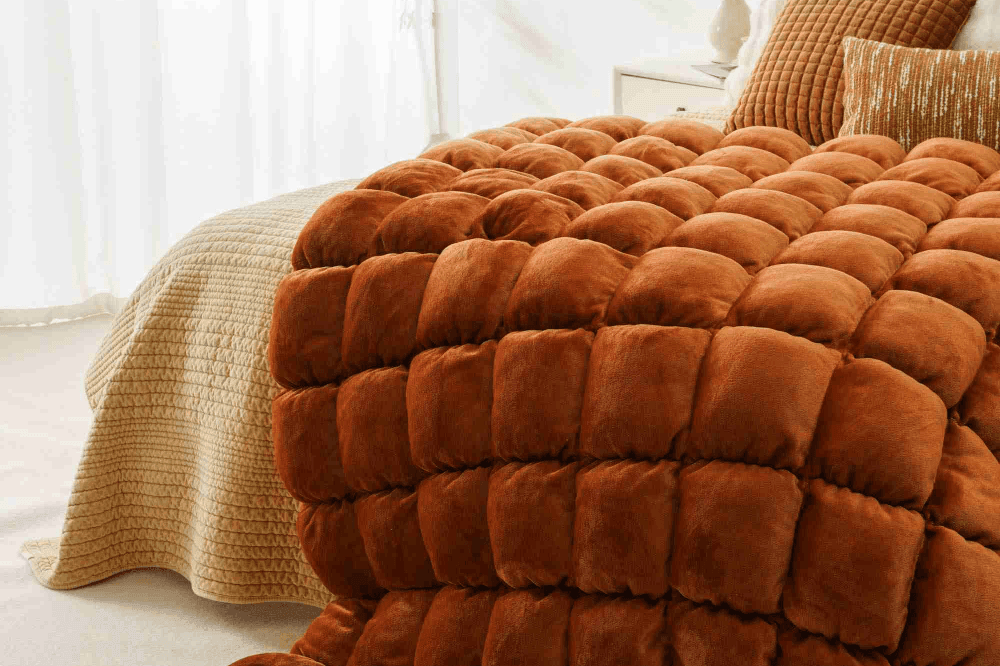
However, recent shifts in consumer demand toward sensory, tactile living spaces have elevated textured bedding into a dominant market force. Leading this movement is the Bubble Comforter, a design characterized by its dimensional 3D surface puckers and cloud-like visual depth.
When expanding your bedding catalog for the upcoming sales season, deciding between a classic quilted construct and a textured bubble finish directly impacts your product margins, logistics footprint, and e-commerce conversion rates. Below is a detailed, manufacturer-level comparison to help sourcing teams select the right fit—or optimal blend—for their target market.
1. Aesthetic Impact & Shelf Appeal
Visual differentiation on retail shelves and digital storefronts is essential for driving consumer interest.
Traditional Quilted Comforters
Traditional quilted comforters rely on structural stitching (such as diamond, square box, or jump-tack patterns) to keep internal fill evenly distributed.
• Design Aesthetic: Clean, symmetrical, and tailored.
• Consumer Appeal: Appeals strongly to traditionalists who value classic hotel-style bedding or minimal aesthetics.
• Limitations: Flat surfaces can appear uniform or generic in online photos, requiring heavy styling, throw pillows, and layered props to create compelling hero images.
Bubble Comforters
Bubble comforters utilize specialized woven or puckered surface techniques that create self-contained, soft raised mounds across the fabric face.
• Design Aesthetic: Plush, modern, and richly dimensional.
• Consumer Appeal: Captures the growing consumer preference for tactile, Scandinavian-inspired, or cozy “soft-living” bedroom decor.
• E-Commerce Advantage: The 3D surface catches studio lighting naturally, creating immediate visual interest in thumbnail images without requiring complex bedding staging.
2. Manufacturing & Material Performance
Understanding how each product performs under repeated use and commercial laundering is critical for minimizing product returns and maintaining brand reputation.
| Feature / Performance | Traditional Quilted Comforter | Bubble Comforter |
| Fill Stabilization | High (Locked in by stitch lines) | High (Natural surface loft) |
| Wrinkle Visibility | Moderate to High (Requires ironing) | Extremely Low (Masked by texture) |
| Fabric Elasticity | Standard / Flat | High Micro-Stretch / Flexible |
| Care & Maintenance | Standard machine wash | Low maintenance / No ironing needed |
• Fill Shift Control: Traditional quilting excels at keeping polyfill or down-alternative fibers permanently anchored inside individual stitched boxes. Bubble comforters achieve a similar balance by pairing structural backing fabrics with lightweight, high-loft fill, ensuring the dimensional top face remains plump after washing.
• Wrinkle Masking: Standard flat woven comforters easily show creasing from tight retail packaging or home washing. Bubble textures naturally disguise minor wrinkles, making them an exceptional option for low-maintenance households, dorm rooms, and short-term rental properties like Airbnb.
3. Shipping Volume & Logistics Efficiency
Logistics costs represent a significant percentage of landed cost for home textile importers and wholesalers. Comparing how each product compresses during transport is key to maximizing container utilization.
Volume & Compression Recovery
• Quilted Comforters: Standard quilted comforters compress predictably under mechanical pressure. However, heavy top-stitching can create dense fold points, requiring sturdy master cartons to avoid crush damage.
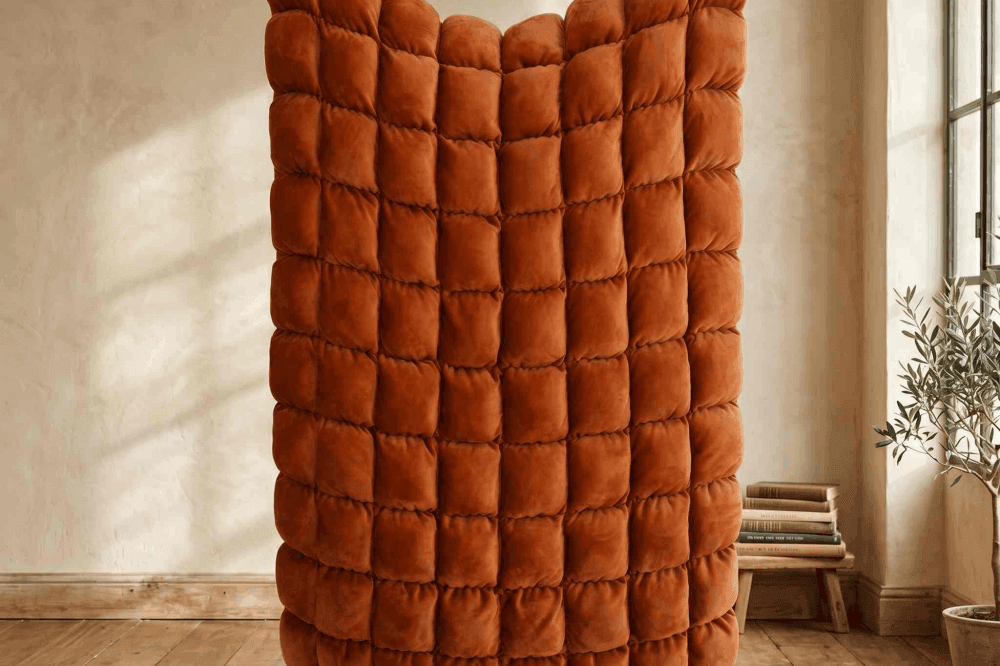
• Bubble Comforters: Thanks to the structural micro-elasticity of the bubble pattern, bubble comforters handle high-density vacuum packaging exceptionally well. Once unpacked, the air pockets within the 3D texture help the shell bounce back to full loft rapidly without leaving permanent fold creases.
Logistics Tip: Vacuum sealing bubble comforters can reduce master carton volume by up to 60% to 70%, lowering sea freight cost per unit and optimizing warehouse rack storage.
4. Retail Margins & E-Commerce Conversions
Differentiation directly dictates pricing power. While traditional bedding often faces intense price competition, textured specialty items open opportunities for higher gross margins.
Pricing & Margin Potential
• The Commodity Trap: Traditional flat quilted comforters are widely available across big-box retailers. Because consumers view them as a commodity, retailers often face tight margin caps driven by price competition.
• The Specialty Premium: Textured items like bubble comforters are perceived as “boutique” or “premium specialty” goods. Retailers can command 15% to 30% higher retail price points compared to flat alternatives with similar manufacturing cost baselines.
Conversion Rates & Return Rates
In e-commerce channels, 3D texture drives higher click-through rates (CTR) on social media ads and search engine listings. Furthermore, because the tactile feel of a bubble comforter matches its visual representation online, customer satisfaction upon unboxing remains high, helping to reduce return rates driven by texture mismatches.
5. Selection Guide: Which Should You Add to Your Catalog?
Choose Traditional Quilted Comforters if:
• You supply institutional clients (hospitals, large hotel chains).
• Your brand identity centers on formal, tailored, or traditional bedroom decor.
• You need low-cost, high-volume basic essentials for opening price points.
Choose Bubble Comforters if:
• You run an e-commerce or DTC brand looking for high-CTR hero products.
• Your customers prioritize low-maintenance, wrinkle-resistant bedding.
• You want to expand high-margin seasonal collections with a boutique feel.
Partner with Olive Home for Custom Bedding Manufacturing
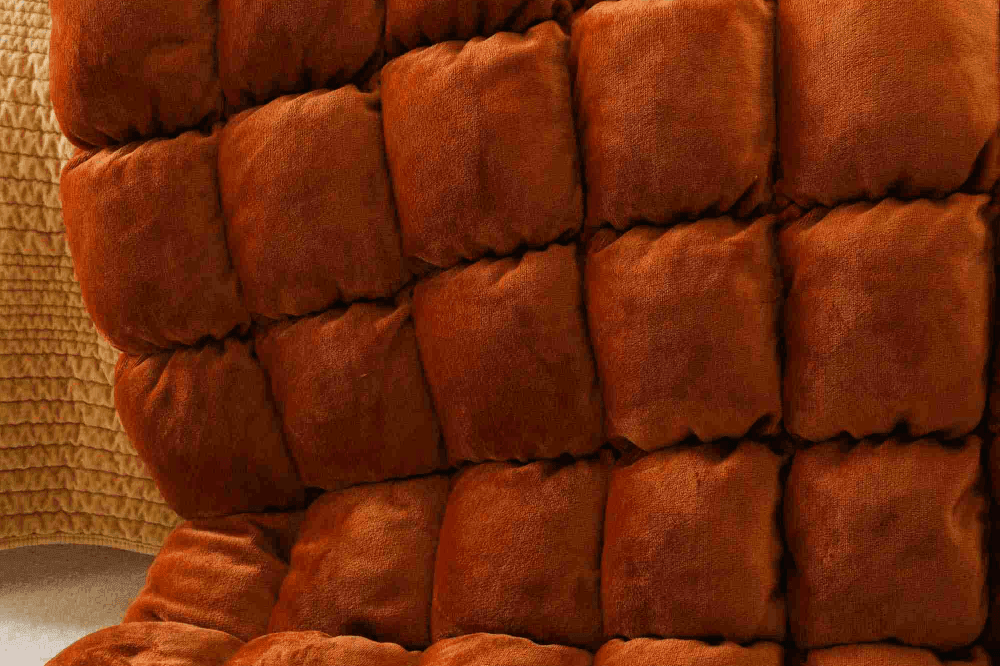
As an experienced B2B home textile manufacturer, Olive Home supplies wholesale buyers, department stores, and private-label brands with market-ready bedding solutions. Whether you are looking to source high-volume traditional quilted lines or custom-dyed Fluffy Bubble Comforters, our team provides complete OEM/ODM support—from fabric sourcing and GSM fill adjustments to branded packaging and GRS-certified sustainable options.
Expand your bedding collection with proven market performers. Contact our sourcing team today to request material swatches, low-MOQ trial options, or a competitive quotation.