 English
 Arabic
 Chinese (Simplified)
 Dutch
Dutch French
 German
 Italian
 Portuguese
 Russian
 Spanish
As demand for thermal comfort continues to grow, cooling bedding has developed from a seasonal product into a broader functional category. For retailers, e-commerce brands, and home textile importers, cooling blankets offer an opportunity to expand bedding collections with products that combine comfort, performance, and clear technical differentiation.
Delivering a noticeable and lasting cooling effect, however, requires more than a temporary surface treatment. Material structure, thermal performance, color stability, fabric finishing, and production consistency all influence the final product.
For a cooling blanket manufacturer, the challenge is therefore not only to create an immediate cool-touch sensation, but also to maintain that performance through product development and bulk production.
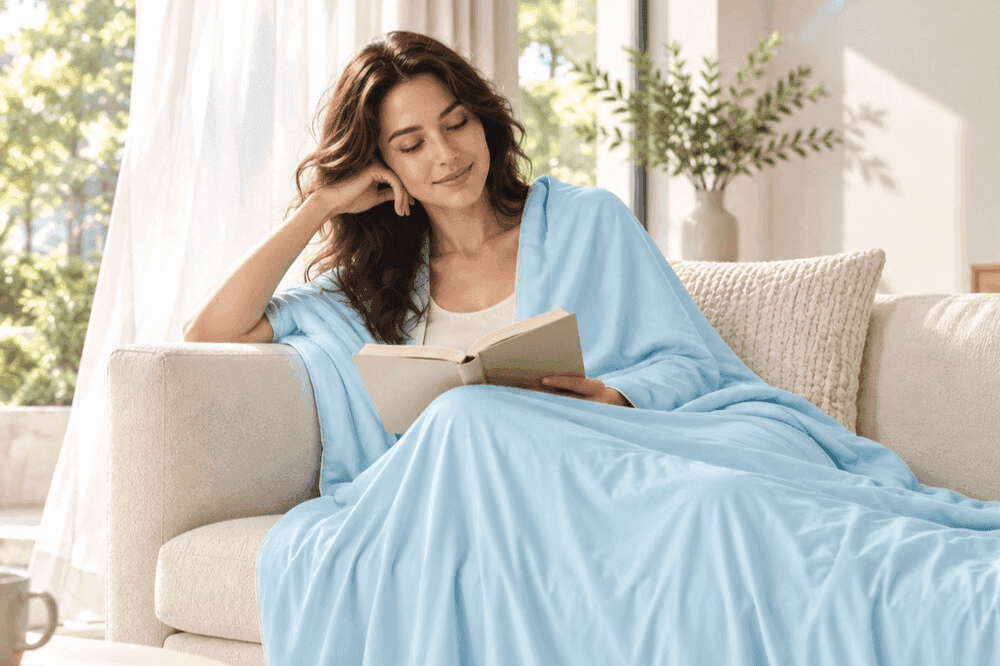
1. Material Innovation: Building Long-Lasting Thermal Relief
Effective cooling bedding relies heavily on fiber structure and thermal performance. At Olive Home, cooling blanket development can involve several material approaches depending on the intended product positioning.
Cool-Touch Yarns
High-PE (Polyethylene) and specialized nylon filaments are designed to transfer heat away from the body upon contact, helping create an immediate cooling sensation.
Phase Change Materials (PCM)
PCM coatings and microcapsules can absorb, store, and release heat as temperatures change, helping support a more balanced sleeping environment.
Lyocell & Botanical Blends
Combining cooling filaments with Lyocell can add moisture management, softness, and a smoother drape, giving buyers another option for comfort-focused bedding collections.
Cooling performance is commonly evaluated using the Q-max value, which measures the rate of heat transfer when the fabric first comes into contact with the skin. While standard bedding fabrics may register below 0.15, selected high-performance cooling constructions developed by Olive Home can reach Q-max values above 0.30, depending on the material and fabric structure.
For buyers, this provides a clearer technical reference when comparing cooling materials and defining performance expectations during product development.
2. Four Manufacturing Capabilities Behind Scalable Production
Producing cooling blankets at scale requires more than selecting the right yarn. Dyeing, printing, testing, and production coordination all affect whether the approved sample can be reproduced consistently in bulk.
Superior Dark Colorfastness
Deep colors can be more difficult to control on synthetic cooling filaments, particularly when buyers require rich shades together with stable wash performance.
Through controlled dyeing and multi-stage color-fixing processes, Olive Home works to improve color consistency and reduce fading or shade migration. Selected constructions can achieve colorfastness ratings of Grade 4.0 or above, supporting both residential and commercial bedding applications.
Extra-Wide Format Printing
Large-scale prints and continuous patterns are increasingly used in modern bedding collections. Standard narrow-width printing may require multiple fabric panels for Full, Queen, or King-size products, which can create center seams or pattern alignment issues.
Extra-wide printing equipment allows larger designs to be produced with greater visual continuity across oversized bedding. Wider fabric formats can also support more efficient cutting layouts and reduce unnecessary material waste during production.
In-House Quality Testing
Internal testing helps identify material or construction issues before they move further into bulk production.
Depending on the project, testing may include pilling resistance, dimensional stability after washing, seam performance, and other fabric-related checks. This allows the production team to compare samples and bulk materials more consistently against approved specifications.
Integrated One-Stop Production
Fragmented production can create communication gaps between knitting, dyeing, cutting, sewing, and packing.
By coordinating key production stages within an integrated workflow, Olive Home can follow material quality and production progress more closely from fabric preparation through final packaging. Earlier-stage defects can also be identified before they continue into cutting or sewing, helping improve overall order consistency.
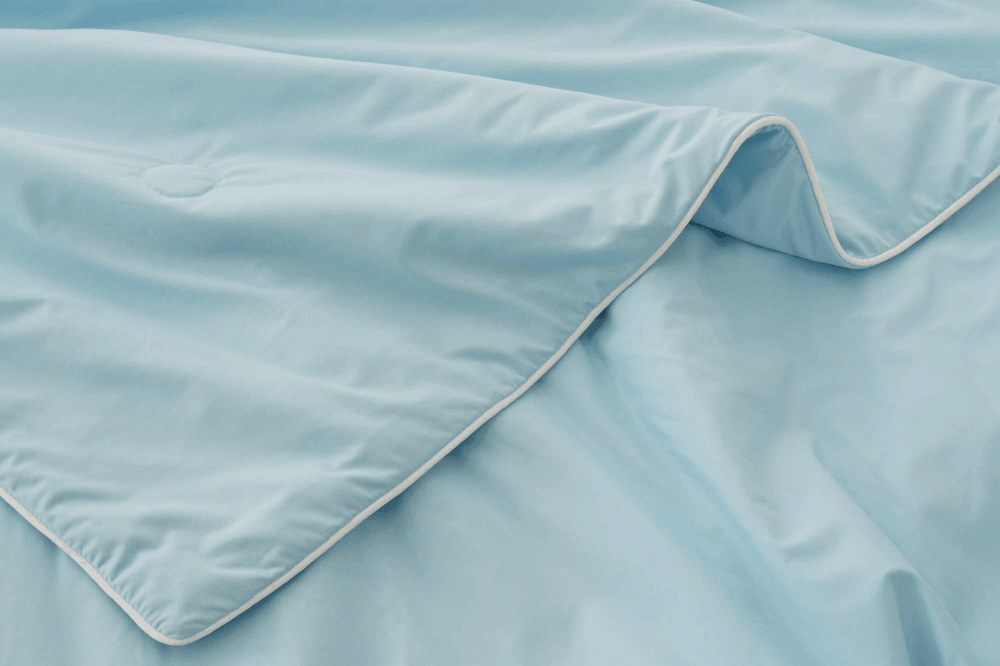
3. Tailored Development for Different Market Positions
Cooling blankets are not developed for a single price point or retail channel. Product construction can be adjusted according to the buyer’s target market, expected performance, and collection positioning.
Common customization areas include:
· Material & Price Structure: Adjusting yarn composition, fabric construction, GSM, filling, or backing materials according to target product positioning.
· Custom Colors & Prints: Pantone color matching, seasonal color development, and wide-format printing for branded or collection-specific designs.
· Private Label Details: Woven labels, care labels, belly bands, ribbons, inserts, and other branding elements for retail presentation.
· Product Specifications: Size, weight, finishing, and construction details can be developed according to different wholesale and retail programs.
These options allow brands and importers to create different product tiers rather than relying on one standard cooling blanket specification.
4. Packaging Efficiency for Bulk Shipping
Packaging is also an important consideration for bulk bedding orders.
Cooling blankets, especially laminated or filled constructions, can occupy significant shipping volume if they are packed without compression. High-density vacuum packing can help reduce package volume while still allowing the blanket to recover after unpacking.
For importers and wholesale buyers, more compact packaging can improve container utilization and help control freight cost per unit, particularly for higher-volume programs.
Packaging can also be customized with branded inserts, labels, belly bands, ribbons, or other retail-ready presentation options depending on the target sales channel.
5. Verified Performance Before Bulk Production
Performance claims are more useful when they can be supported by measurable testing.
Depending on the product construction and project requirements, key areas may include:
· Instant Cooling: Q-max testing for contact cooling performance
· Fabric Durability: Pilling resistance and dimensional stability
· Color Integrity: Colorfastness to washing, rubbing, or light
· Air & Moisture Flow: Air permeability and moisture transmission
· Bulk Consistency: Comparison between approved samples and production specifications
These checks help buyers evaluate more than the appearance of the product. They also provide a clearer basis for confirming whether materials, construction, and bulk production meet the intended requirements.
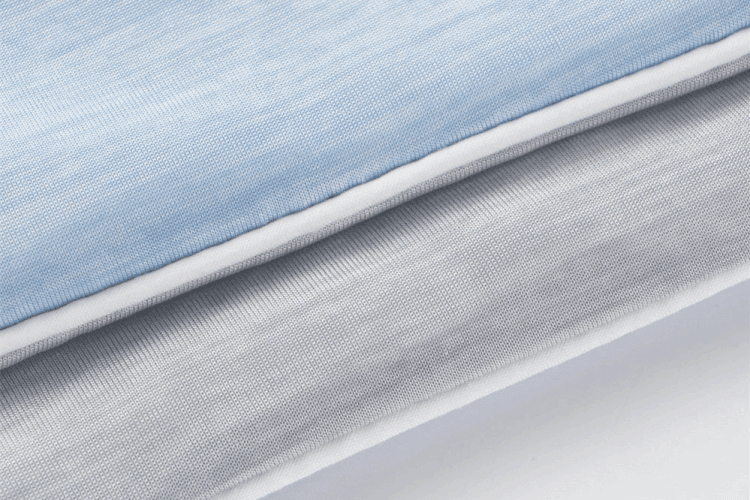
Building Your Next Cooling Collection
Developing a successful cooling blanket collection requires the right balance of material performance, product positioning, design, and manufacturing control.
For brands, retailers, and home textile importers, working with an experienced cooling blanket manufacturer can make it easier to coordinate cool-touch materials, customized specifications, printing, testing, private label details, and bulk production within one development process.
Olive Home supports OEM and ODM cooling bedding programs with flexible material options, integrated production, quality testing, and customized packaging solutions.
Contact our team to discuss material swatches, Q-max testing, private label options, or custom development requirements for your next cooling blanket collection.
FAQs
Yes. Cooling performance can be evaluated through Q-max testing, together with other checks such as pilling resistance, dimensional stability, colorfastness, and moisture-related performance. These tests help buyers confirm product specifications before moving into bulk production.
Yes. Customization can include fabric composition, GSM, size, color, prints, woven labels, care labels, belly bands, inserts, and retail packaging.
Buyers should confirm the approved sample, cooling performance, fabric durability, colorfastness, dimensions, branding details, packaging requirements, and bulk production standards before mass production begins.
Yes. Depending on the blanket construction, vacuum or high-density compression packing can help reduce shipping volume and improve container utilization while allowing the product to recover after unpacking.